Methylene Blue USP Methylthioninium Chloride BP Ph Eur Methylene Blue Manufacturers |
Muby chemicals, is the flagship company in Mubychem Group, established in 1976, It has several manufacturing units in its wings, making Chemicals including Methylene Blue or Methylthioninium Chloride, Pharmaceutical Excipients & Flavour Chemicals in India. Mubychem Group has manufacturing facilities spread across Western India and sales purchase agents in several countries. The associated manufacturing units are accredited with certifications like FDA cGMP and GLP Approval, ISO-9001 ISO-14001, ISO/IEC 17025, ISO-22000, FSSC 22000, ISO 45001, Certification, "REACH" registration, Kosher, Halal & HACCP Certification. |
| We are chemical supplier exporter to almost every country and have a representatives in major business areas. We serve from small packs to container loads. |
 --------
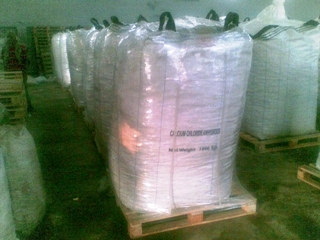
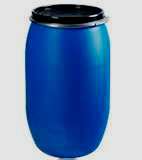
CAS Number 61-73-4 and 7220-79-3
Chemical Formula: C16H18N3CIS
Molecular Weight: 319.85 gm / mole
Chemical Name: 3,7-bis(Dimethylamino)-phenazathionium chloride Tetramethylthionine chloride
CAS Registration: 61-73-4
C.I No.: 52015
Appearance: Dark Green Crystalline Powder
Assay (as is basis): 80 % - 85%
Assay (on dry basis): 98% -101%
Loss on drying: 10% -20%
Solubility: Clear Blue Solution
Ash content: 1% Max
Residual Solvent: Nil
Aluminium: 100 ppm Max
Cadmium: 1ppm Max
Chromium: 10ppm Max
Copper: 50ppm Max
Tin: 10 ppm Max
Iron: 100ppm Max
Manganese: 10ppm Max
Mercury: Nil
Molybdenum: 10ppm Max
Methylene Blue USP
Methylene Blue
C16H18ClN3S·3H2O 373.90
Phenothiazin-5-ium, 3,7-bis(dimethylamino)-, chloride, trihydrate.
C.I. Basic Blue 9 trihydrate CAS 7220-79-3
Anhydrous 319.86 CAS 61-73-4
Methylene Blue contains not less than 98.0 percent and not more than 103.0 percent of C16H18ClN3S, calculated on the dried basis.
Identification: Infrared Absorption 197K .
Loss on drying— Dry it at 75 and at a pressure not exceeding 5 mm of mercury for 4 hours: it loses between 8.0% and 18.0% of its weight.
Residue on ignition: not more than 1.2%.
Arsenic— Prepare the Test Preparation by mixing 0.375 g with 10 mL of water in the arsine generator flask. Add 15 mL of nitric acid and 5 mL of perchloric acid, mix, and heat cautiously to the production of strong fumes of perchloric acid. Cool, wash down the sides of the flask with water, and again heat to strong fumes. Again cool, wash down the sides of the flask, and heat to fumes. Cool, dilute with water to 52 mL, and add 3 mL of hydrochloric acid: the resulting solution meets the requirements of the test, the addition of 20 mL of 7 N sulfuric acid specified for Procedure being omitted. The limit is 8 ppm.
Copper or zinc— Ignite 1.0 g in a porcelain crucible, using as low a temperature as practicable, until all of the carbon is oxidized. Cool the residue, add 15 mL of 2 N nitric acid, and boil for 5 minutes. Filter the cooled solution, and wash any residue with 10 mL of water. To the combined filtrate and washing add an excess of 6 N ammonium hydroxide, and filter the solution into a 50 mL volumetric flask. Wash the precipitate with small portions of water, adding the washings to the filtrate, dilute the solution with water to volume, and mix. To 25 mL of the solution add 10 mL of hydrogen sulfide TS: no turbidity is produced within 5 minutes (absence of zinc). Any dark color produced does not exceed that of a control prepared by boiling a quantity of cupric sulfate, equivalent to 200 @g of copper, with 15 mL of 2 N nitric acid for 5 minutes and by treating this solution as directed above, beginning with “Filter the cooled solution” (0.02% of copper).
Chromatographic purity— Quantitatively dissolve an accurately weighed quantity of Methylene Blue in methanol to obtain a Test solution containing 1.0 mg per mL Dissolve a suitable quantity of USP Methylene Blue RS in methanol to obtain a Standard solution having a concentration of 100 @g per mL. Quantitatively dilute a portion of this solution with methanol to obtain a Diluted standard solution having a concentration of 10 @g per mL. Apply 5 @L each of the Test solution, the Standard solution, and the Diluted standard solution to a suitable thin-layer chromatographic plate coated with a 0.25-mm layer of octadecylsilanized chromatographic silica gel. Allow the spots to dry, and develop the chromatogram in a chromatographic chamber with a solvent system consisting of a mixture of the upper layer separated from a well-shaken mixture of water, n-butanol, and glacial acetic acid (100:80:20), until the solvent front has moved about three-fourths of the length of the plate. Remove the plate from the chamber, allow the solvent to evaporate, and visually locate the spots on the plate: the RF value of the principal spot in the chromatogram from the Test solution corresponds to that from the Standard solution, and other spots, if present in the chromatogram from the Test solution, consist of a secondary spot that does not exceed in size or intensity, the principal spot obtained from the Standard solution (10%), and not more than two additional spots, neither of which exceeds in size or intensity the principal spot from the Diluted standard solution (1%)Assay— Transfer about 100 mg of Methylene Blue, accurately weighed, to a 250-mL volumetric flask, dissolve in and dilute with diluted alcohol to volume, and mix. Transfer 5.0 mL of this solution to a 100-mL volumetric flask, dilute with diluted alcohol to volume, and mix. Transfer 5.0 mL of this solution to a 50-mL volumetric flask, dilute with diluted alcohol to volume, and mix. This solution contains about 2 @g per mL. Dissolve an accurately weighed quantity of USP Methylene Blue RS in diluted alcohol, and dilute quantitatively and stepwise with diluted alcohol to obtain a Standard solution having a known concentration of about 2 @g per mL. Concomitantly determine the absorbance of both solutions in 1-cm cells at the wavelength of maximum absorbance at about 663 nm, with a suitable spectrophotometer, using diluted alcohol as the blank. Calculate the quantity, in mg, of C16H18ClN3S in the Methylene Blue taken by the formula:
in which C is the concentration, in @g per mL, of anhydrous methylene blue in the Standard solution; and AU and AS are the absorbance of the solution of Methylene Blue and the Standard solution, respectively.
Methylthioninium Chloride BP or Methylthioninium Chloride Ph. Eur is also offered.
IUPAC name is 3,7-Bis(dimethylamino)phenothiazin-5-ylium chloride or 3,7-bis(Dimethylamino)-phenothiazin-5-ium chloride
Methylene Blue USP Methylthioninium Chloride BP Ph Eur Grade Manufacturers:
Muby Chemicals & Associated Cos
BANDEALI BUILDING, CHINCHBUNDER, MUMBAI 400009, INDIA.
TEL: 91-22-65290109. Gujarat & Mumbai India.
info(At the Rate i.e. @)mubychem(dot)com

Copyright and Usual Disclaimer is Applicable
Last updated 27-mar-26
Exports to USA UAE Europe South Africa Tanzania Kenya Uganda Egypt Nigeria Turkey Brazil Chile Argentina Dubai Cameroon Guatemala Mexico etc.
Barter
They who love thee on this earth, keep calling on thee and chanting thy beads
Lest thou forgetest.
They assign the credit of their hard work to your blessings
They keep you amused.
They come to thy temple with baskets of fruits, as if you were a glutton
They deny the same to their children.
They offer you milk for a bath and burn the ghee
They hardly understand the meaning of it.
They bring gold and diamonds. They come with beating of drums
They love to advertise their offerings.
They offer you a small bribe as advance for booty, called lottery
They love to dream.
I do not bow down at your door
I do not bargain for booty
Your promise of the heaven does not lure me
Your hell-fire does not scare me
I do not even know the proper method of prayer
I do not offer any thing to you
Ages have gone by and I have not seen you my lord
Yet my love for you keeps waiting for you.